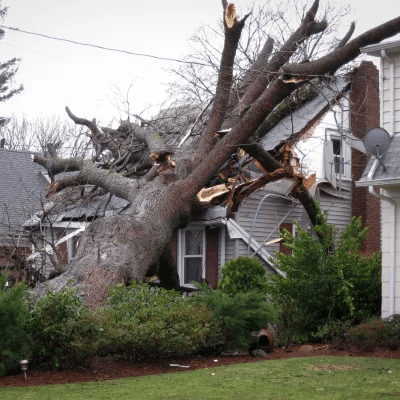
The most important maintenance you can do for your trees is regular, professional Read this trimming. Most Connecticut residents think of pruning as something done to keep trees smaller or improve their appearance. But the biggest benefit is that tree trimming prevents damage to your home and property, potentially saving thousands of dollars in repair costs.
Keep reading to discover five ways that regular tree trimming can protect your home, your property, and your family.
Common Types of Damage Caused by Trees
Trees in Connecticut can cause a wide range of property damage when they fall or drop large branches. Here are the most common types of property damage caused by falling branches and trees:
Roof Damage: Falling trees or large branches can cause significant damage to roofs, including broken shingles, punctures, and even structural collapse in severe cases. Roof damage often requires extensive repairs to prevent water leaks and further structural issues.
Wall and Siding Damage: Trees falling against the side of a house can break windows, damage siding, knock off window AC units, and even poke holes in walls. This can lead to additional problems such as water intrusion and loss of insulation.
Foundation Damage: While less common, large trees falling close to a house can impact the foundation, especially if the tree’s roots are extensive and intertwined with the foundation structure
Clogged Gutters and Drains: Leaves, branches, and other debris from trees can clog gutters and drains, leading to water damage and potential flooding during heavy rains. Clogs can also cause damage to roofing, siding, and foundations.
Crushed Vehicles: Falling trees or branches can crush parked cars or fall on moving vehicles, causing injuries and extensive car damage that often requires significant repairs or even replacement of the vehicle. Car damage is a common issue in residential areas where trees are close to driveways and streets. We’ve also seen multiple recent cases of trees falling on cars on the Merritt Parkway.
Injury from Falling Branches: Dead or weakened branches can fall unexpectedly, posing a risk of injury to people walking, sitting, or working beneath them. This is particularly dangerous in public areas like parks and sidewalks, as well as on residential properties with decks, patios, or pools where people tend to sit outdoors.
Fallen Power Lines: Trees or branches falling on power lines can cause power outages, electrical fires, and pose significant safety risks. Connecticut residents are well aware of this as it’s a frequent issue during storms.
Disrupted Communication Lines: Trees can also damage telephone and internet lines, leading to disruptions in communication services.
Blocked Roads and Driveways: Fallen trees and large branches can block roads and driveways, creating obstacles for vehicles and emergency services. This can be particularly problematic in rural or wooded areas.
Damage to Other Plants: Falling trees and branches can crush smaller plants, shrubs, and other trees, disrupting the landscape and potentially killing other vegetation.
While the list of potential damage caused by trees may seem overwhelming, the good news is that professional pruning and tree trimming can prevent much of the property damage caused by trees.
 Site Title